SaaS Contract Start vs Subscription Start: Revenue Recognition and Commission Mistakes
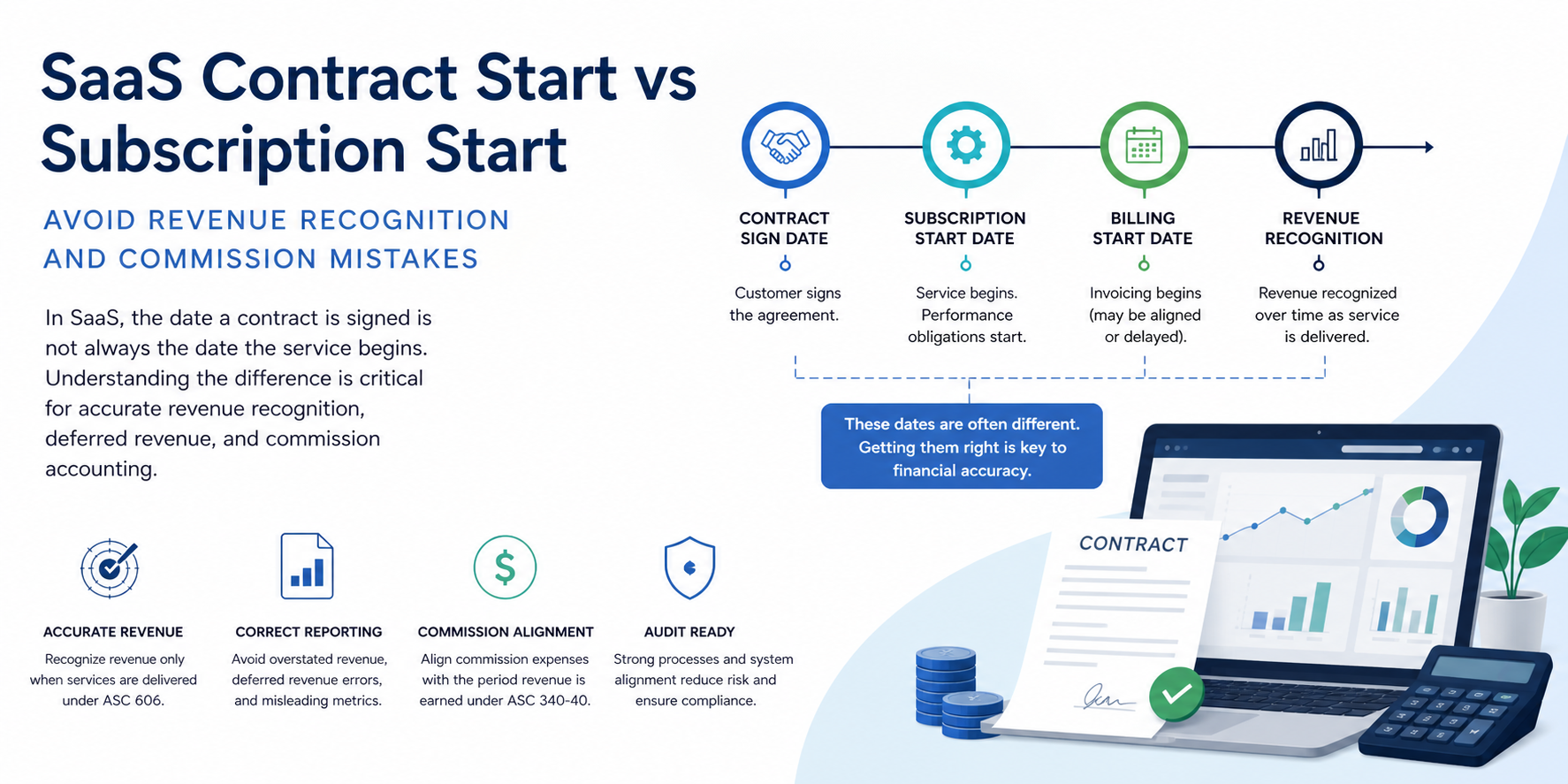
In SaaS businesses, a common mistake is confusing the contract start date with the subscription start date. While they may seem similar, this difference directly impacts revenue recognition, deferred revenue, and commission accounting.
As companies rely on systems like Salesforce CRM and HubSpot CRM, this misalignment often becomes embedded in reporting—leading to inaccurate financials and poor decision-making.
Why Timing Matters in SaaS
SaaS contracts often include delays between signing and service delivery due to onboarding or implementation.
Under ASC 606, revenue must be recognized when the service is delivered—not when the contract is signed.
Example:
A contract is signed in January, but service starts in March.
Recognizing revenue in January overstates financial performance.
This mistake impacts:
Revenue accuracy
ARR and MRR reporting
Deferred revenue balances
Common Contract Timing Mistakes
Many companies treat the deal close date as the start of revenue, especially when CRM systems default to this logic. Others assume the contract term equals the service period, even when service begins later.
Example:
Contract signed: January
Service starts: April
Term: 12 months
Revenue should start in April—not January. If not, financial statements become misaligned with actual service delivery.
Commission Tracking Mistakes
Commissions are often paid when a deal closes, but accounting rules require alignment with revenue.
Under ASC 340-40, commissions may need to be capitalized and amortized over the contract period.
Example:
A $10,000 commission on a 2-year deal should be spread over 24 months—not expensed immediately.
If companies expense commissions upfront:
Early-period costs are overstated
Profitability appears inconsistent
Financial reporting becomes misleading
This is why commission tracking is critical—it directly affects margins and audit readiness.
System Misalignment Across SaaS Tools
CRM, billing, and accounting systems often operate separately. If they are not aligned:
Revenue starts on the wrong date
Commission timing is incorrect
Reports don’t reconcile
Even a small mismatch—like a delayed start date not syncing across systems—can create ongoing reporting issues.
Final Thoughts
The difference between contract start and subscription start is small, but its impact is significant. It affects revenue recognition, deferred revenue, and commission accounting across the entire business.
SaaS companies that clearly separate these dates and align their systems gain:
More accurate financial reporting
Better visibility into performance
Stronger compliance with accounting standards
Getting contract timing right is not just an accounting requirement—it’s a key part of running a scalable SaaS business.
📌 Services & Disclaimer
This content is for informational purposes only and should not be considered legal, tax, or accounting advice. Please consult with a qualified professional regarding your specific situation. Acrux Advisory is not a CPA firm and does not provide services requiring a public accountancy license.